
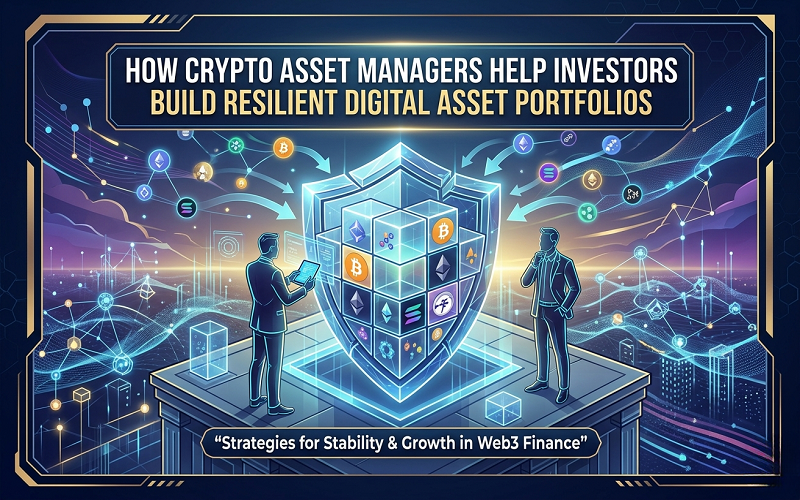
The cryptocurrency market has created significant opportunities for investors, but it has also introduced a level of complexity that many traditional investment strategies were never designed to address. Digital assets move quickly, market conditions can change overnight, and new blockchain projects emerge every week.
For investors looking beyond speculation, the focus is increasingly shifting toward strategy, risk management, and long-term portfolio growth. This is where Crypto Asset Managers play an important role. By combining investment expertise with an understanding of blockchain technology, they help investors navigate a market that continues to evolve at a rapid pace.
Why Building a Crypto Portfolio Requires More Than Picking Coins
Many newcomers assume that successful crypto investing comes down to identifying the next big cryptocurrency. While asset selection matters, portfolio performance often depends on a broader set of factors.
A strong digital asset strategy considers:
- Asset allocation
- Risk tolerance
- Market cycles
- Liquidity requirements
- Diversification opportunities
- Long-term investment goals
Investors who focus solely on individual token performance may overlook the importance of portfolio structure, which often has a greater impact on long-term results.
What Makes Crypto Different From Traditional Investments?
Cryptocurrencies share some similarities with stocks and other financial assets, but they also introduce unique characteristics.
Digital asset markets operate continuously without traditional trading hours. Blockchain networks evolve through upgrades and governance decisions. Decentralized finance protocols create opportunities that do not exist in conventional markets.
These differences require specialized knowledge and ongoing monitoring.
Rapid Innovation
The blockchain industry develops quickly. New sectors such as decentralized finance, real-world asset tokenization, blockchain gaming, and Web3 infrastructure regularly create investment opportunities.
Understanding which innovations have sustainable value requires thorough research and analysis.
Higher Volatility
Price fluctuations in digital assets often exceed those found in traditional markets. Significant gains and losses can occur within short periods.
Managing this volatility effectively is one of the primary responsibilities of professional portfolio managers.
How Crypto Asset Managers Approach Diversification
Diversification remains one of the most widely used risk management principles in investing.
A diversified crypto portfolio may include assets serving different purposes within the blockchain ecosystem. Some assets function as stores of value, while others support smart contracts, decentralized applications, or infrastructure services.
Large-Cap Digital Assets
Established cryptocurrencies often provide the foundation for a portfolio due to their liquidity and market maturity.
Emerging Blockchain Projects
Growth-oriented allocations may focus on innovative protocols, decentralized finance platforms, or blockchain infrastructure solutions.
Income-Generating Opportunities
Certain digital assets may offer staking rewards or participation in network validation activities, creating additional return opportunities beyond price appreciation.
By spreading exposure across multiple categories, investors can reduce dependence on a single asset or market narrative.
Why Risk Management Often Matters More Than Market Timing
Many investors spend considerable time trying to predict short-term price movements.
Professional portfolio management typically takes a different approach.
Rather than attempting to perfectly time every market cycle, experienced managers focus on controlling risk, maintaining discipline, and adjusting portfolios based on changing conditions.
A structured risk management process may include:
- Position size limits
- Portfolio rebalancing
- Liquidity management
- Sector diversification
- Exposure controls
These practices help investors remain aligned with their long-term objectives even during periods of market uncertainty.
The Importance of Due Diligence in Digital Asset Investing
Every blockchain project presents a unique investment case.
Before allocating capital, investors should understand factors such as network adoption, token supply mechanics, governance structures, development activity, and competitive advantages.
Professional asset managers often rely on detailed research frameworks to evaluate opportunities and identify potential risks.
This process can help investors avoid projects that gain attention through marketing but lack meaningful long-term fundamentals.
How Institutional Interest Is Influencing the Industry
Institutional participation continues to reshape the digital asset landscape.
Investment firms, hedge funds, family offices, and corporate treasury departments are increasingly exploring cryptocurrency exposure as part of broader portfolio strategies.
As larger investors enter the market, expectations surrounding transparency, reporting standards, custody solutions, and governance continue to increase.
The growing involvement of institutional capital has elevated the importance of professional portfolio management and strategic oversight.
Common Mistakes Made by Crypto Investors
Many investment challenges stem from behavioral decisions rather than market conditions.
Some of the most common mistakes include:
Chasing Market Hype
Investing based solely on social media trends or viral narratives can expose portfolios to unnecessary risk.
Lack of Diversification
Concentrating investments in a single asset increases vulnerability to market-specific events.
Ignoring Security Best Practices
Digital asset ownership requires careful attention to wallet security, custody arrangements, and cybersecurity procedures.
Emotional Decision-Making
Fear during market declines and overconfidence during rallies often lead to poor investment choices.
Professional management frameworks help reduce emotional reactions and encourage consistent decision-making.
The Future of Professional Crypto Asset Management
As blockchain technology becomes more integrated into the global financial system, the demand for specialized investment expertise is expected to grow.
Digital assets are expanding beyond cryptocurrencies into areas such as tokenized securities, decentralized finance, stablecoins, and blockchain-based infrastructure. Each development introduces new opportunities and new risks.
For investors seeking a disciplined approach to digital asset investing, Crypto Asset Managers provide valuable expertise in portfolio construction, risk management, market research, and long-term strategy. Their role is becoming increasingly important as the cryptocurrency ecosystem matures and attracts a broader range of participants.
Successful investing in digital assets is rarely about finding a single winning token. More often, it comes from building a resilient portfolio, managing risk carefully, and maintaining a strategy that can adapt to changing market conditions.
